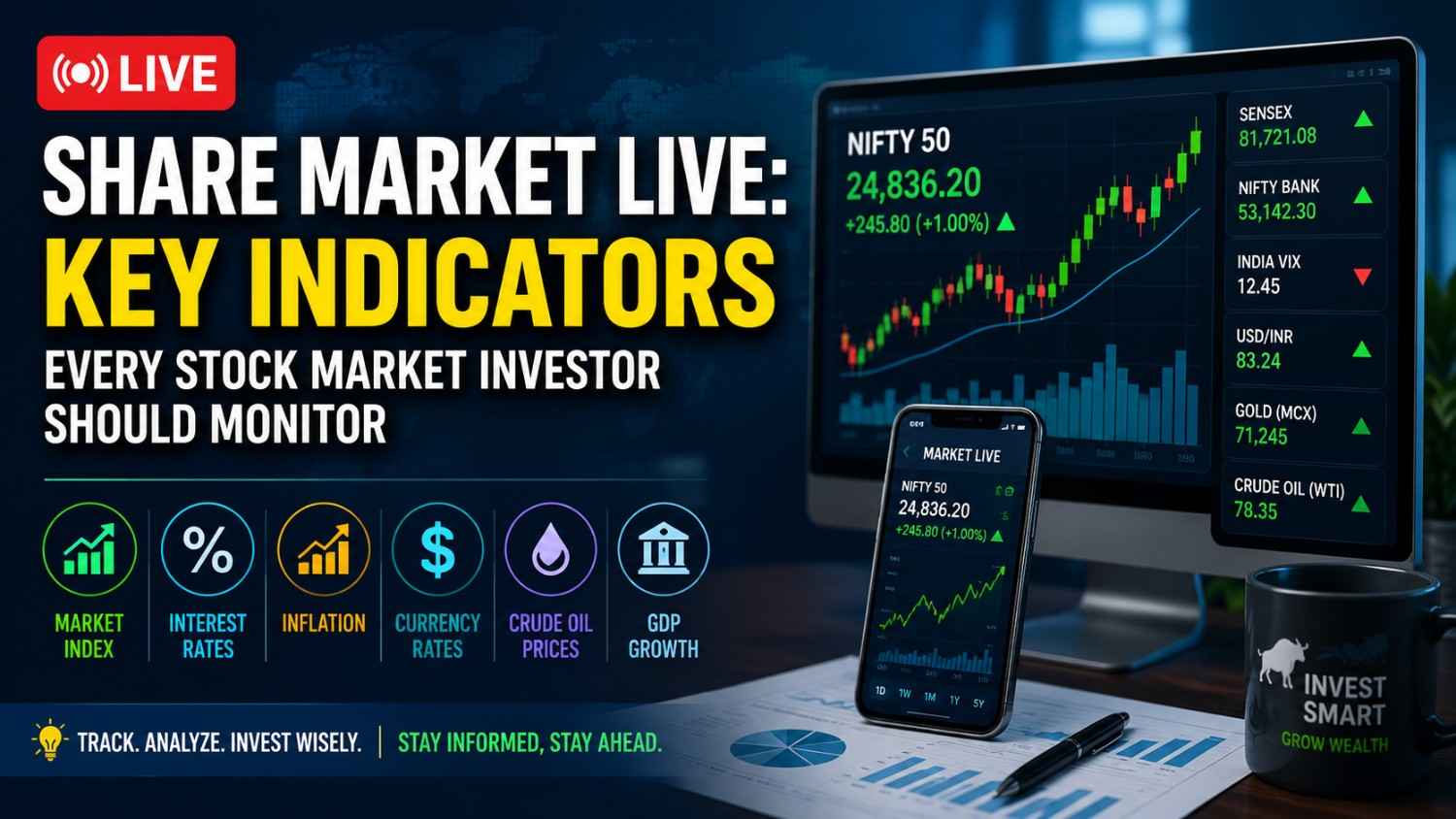
Investing in the stock market involves much more than simply buying and selling shares. Successful investors understand that markets are influenced by a wide range of economic, financial, and company-specific factors.
Monitoring key indicators can help investors make informed decisions, identify opportunities, and manage risks more effectively.
Whether you are a beginner or an experienced investor, understanding the indicators that drive stock performance is essential.
While many investors regularly track the share market live, knowing which indicators matter most can provide deeper insights into market trends and investment opportunities.
Why Stock Market Indicators Matter
Market indicators provide valuable insights into the overall health of the economy, investor sentiment, and corporate performance. They help investors understand market direction, assess risks, identify investment opportunities, and make more informed decisions.
Following the right indicators alongside the share market live can provide a broader perspective instead of relying solely on daily price movements.
Market Indices
Stock market indices are among the most widely tracked indicators because they reflect the overall direction of the market.
Major indices represent leading companies across different sectors. Rising indices generally indicate positive investor sentiment and improving market conditions, while falling indices may reflect uncertainty or weaker market confidence.
Tracking market indices also helps investors determine whether a stock’s movement is company-specific or part of a broader market trend.
Gross Domestic Product (GDP) Growth
GDP measures the total value of goods and services produced within an economy and is a widely used indicator of economic growth.
A growing economy generally supports higher consumer spending, stronger corporate earnings, and improved business confidence, all of which can positively influence the stock market.
Monitoring GDP trends helps investors understand the broader economic environment in which companies operate.
Inflation Rate
Inflation measures the rate at which the prices of goods and services increase over time.
Moderate inflation is generally associated with a growing economy. However, persistently high inflation can increase business costs, reduce consumers’ purchasing power, and affect corporate profitability.
Inflation data also influences interest rate decisions, making it an important indicator for stock market investors.
Interest Rates
Interest rates play a significant role in influencing financial markets.
Higher interest rates increase borrowing costs for businesses and consumers, which may slow economic activity and affect corporate earnings. Lower interest rates generally encourage spending, investment, and business expansion.
Investors should closely monitor monetary policy announcements, as changes in interest rates often influence stock prices and overall market sentiment.
Also Read: Key Factors to Consider When Selecting Aluminium Windows for Residential & Commercial Spaces
Institutional Investment Activity
Institutional investors can significantly influence market movements because of the large size of their investments.
In India, investors often monitor the buying and selling activity of Foreign Portfolio Investors (FPIs) and Domestic Institutional Investors (DIIs).
Strong institutional buying often reflects positive market sentiment, while sustained selling may indicate caution among large investors. Tracking these investment flows can provide useful insights into broader market trends.
Wrapping Up
Successful investing requires more than reacting to daily price movements. Monitoring key indicators such as market indices, GDP growth, inflation, interest rates, and institutional investment activity can provide a clearer understanding of market conditions.
While many investors regularly follow the share market live to stay updated on daily market movements, combining real-time information with a deeper understanding of these indicators can lead to more informed investment decisions.
By focusing on the factors that influence both the economy and financial markets, investors can build a stronger foundation for achieving their long-term financial goals.
About the Author