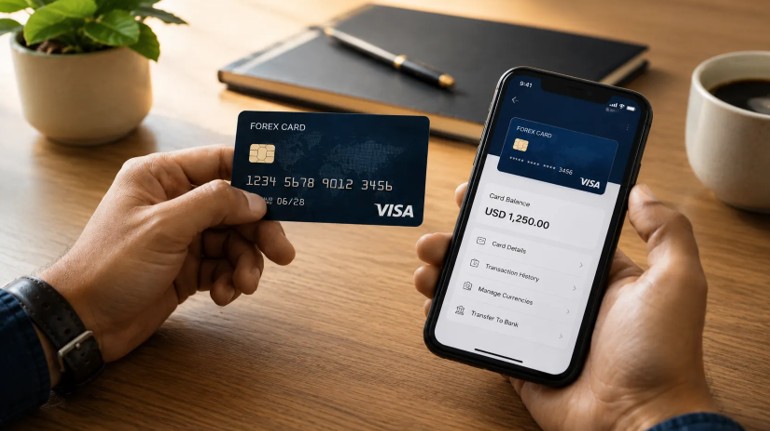
Returning from a trip with money remaining on your forex card is more common than most people expect. A cheaper-than-planned trip, an accidental top-up, any of these can leave you with an idle balance you need to unload. Knowing how to transfer money from a forex card to a bank account is the kind of practical detail nobody really talks about until they actually need it.
Why you might want to reverse the money flow
Not every trip goes as planned, and neither does every forex card top-up.
You may have loaded more than you spent. Your travel plans may have changed at the last minute. Or you’re simply past the point of needing foreign currency and want those funds back. Whatever the reason, you’re not alone in wondering whether this is even possible, and if so, how to do it without losing a significant portion of your balance to fees.
One important clarification upfront: the process differs based on whether you hold a traditional prepaid multicurrency forex card or an INR-based international debit card. That distinction changes everything.
Answering a common question
A lot of travellers come back asking the same thing: can we transfer money from a forex card to a bank account after the trip is over? In most cases, the answer is yes. Most prepaid forex cards allow you to reverse the balance to your Indian bank account. The card provider applies the prevailing exchange rate on that day and converts your unused foreign currency to INR first, and then sends the funds to your registered bank account.
The catch is that this process isn’t free in every case. Some providers charge a flat reversal fee, anywhere from ₹100 to ₹500. Others don’t charge a fee but apply a less favourable exchange rate on the redemption, which is effectively the same thing. It’s worth reading your card’s terms and conditions before assuming the recovery will be seamless.
For travellers who use the Niyo zero forex markup debit card, this is less of a concern. Since it’s linked to an INR-based savings account, not a separate currency wallet, there’s no conversion step involved. The balance is already in rupees, and you can move it out through NEFT, IMPS, or UPI just like any standard bank account transfer.
How to transfer funds from a forex card into a bank account?
Understanding how to transfer money from a forex card to a bank account is essential for efficiently managing any unused balance after international travel. Your approach will depend on who issued your card and on the infrastructure they have implemented.
With the help of an app or a web portal of the provider
This is the shortest path for the majority of people. Log in to your forex card account, look for an option labelled “refund,” “unload card,” or “transfer balance”, or something similar. The exact label varies by provider. Then you’ll enter your bank account number and IFSC code, select the amount, and confirm. Processing usually takes two to four working days. The exchanged INR is deposited into your account once the transaction is received.
Also Read: How Options Trading Works in the Stock Market
By visiting the bank branch
If you bought your prepaid forex card from a bank, you can go to the bank and ask them to reverse it. This is also a secure option if you do not feel comfortable with the online transfer option, or if the app is causing you a hassle. Carry the card, a government-issued photo ID, and your bank account details.
Things to check before you initiate the transfer
Jumping straight to a reversal without checking a few things first can cost you.
The current exchange rate
You loaded money at one rate. You’ll unload it at another time. If the rupee has strengthened since you loaded the card, you’ll get fewer rupees back per unit of foreign currency. If it’s weakened, you’ll get more. Either way, check the rate being offered before confirming.
Whether there’s a reversal fee
Not all providers charge this fee, but it’s important to check beforehand. A ₹300 flat fee on a ₹3,000 reversal amounts to 10%, which is significant. If the fee structure isn’t clearly stated in the app, it’s best to contact customer support before proceeding.
The simpler alternative: INR-based international debit cards
If the question “can we transfer money from a forex card to a bank account” keeps coming up every time you return from a trip, that’s a signal worth paying attention to.
INR-based international debit cards eliminate this problem at its root. The Niyo zero markup forex card is INR-based. It means the money in your account is in INR and gets converted into the desired currency as you use it. There’s no separate currency to convert. When you want to transfer money from a debit card to a bank account, it functions like any regular bank transfer, without conversion fees or watching for favourable currency.
The balance also earns interest while it sits in the savings account, which is something prepaid forex cards don’t offer.
Conclusion
If you’re wondering about how to transfer money from a forex card to a bank account, then the process isn’t complicated, but it does require a bit of attention, particularly around exchange rates, reversal charges, and card validity. Prepaid cards require a currency conversion step; INR-based cards skip it entirely, making transfers simpler.
In short, the answer to the frequently asked question, “Can we transfer money from a forex card to a bank account without losing much in the process?” depends on the type of card you use. It is always best to know how the mechanics work before you load a lot of money and then realise you have to spend a lot of time trying to adjust the mechanism.
About the Author