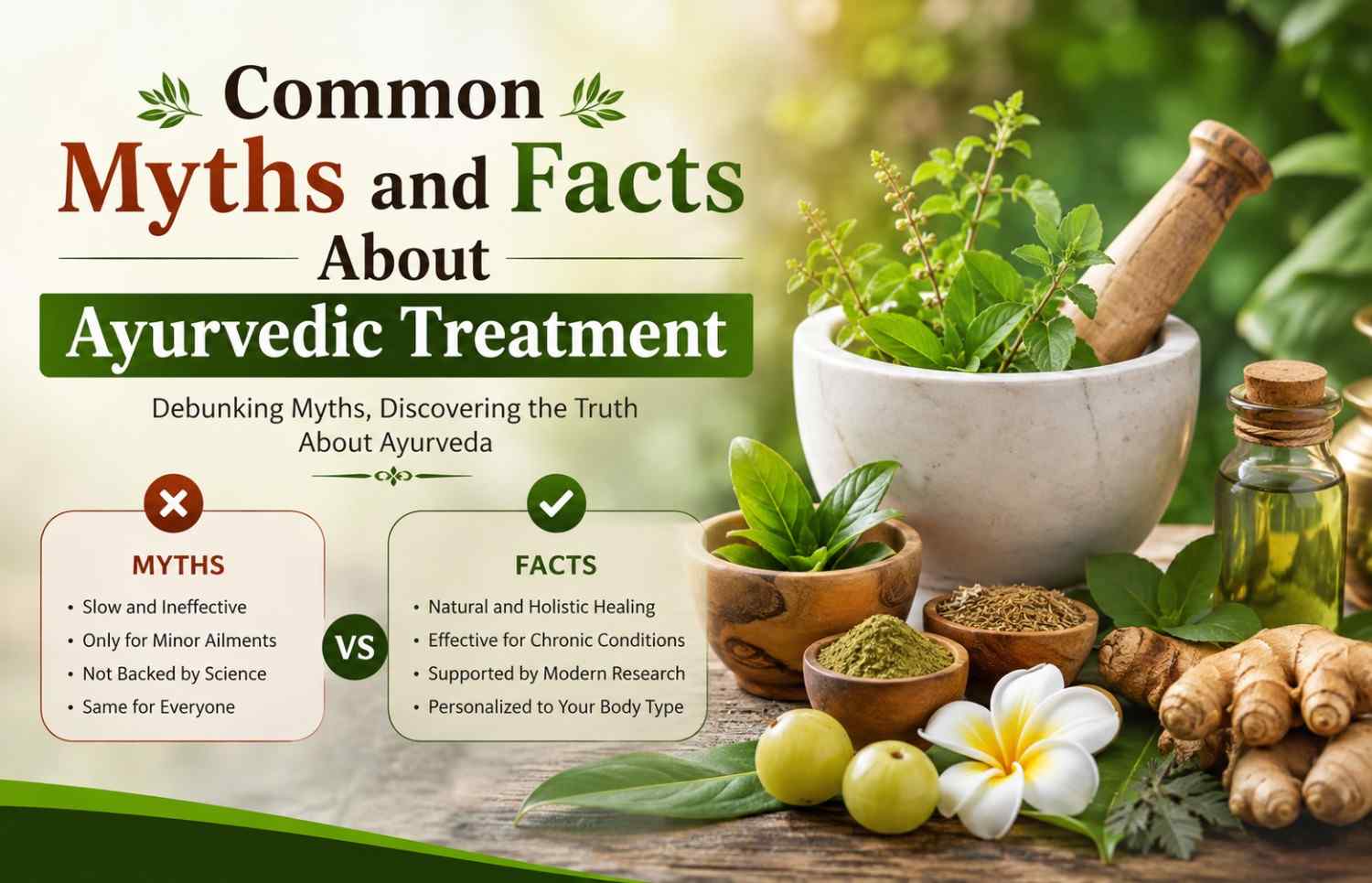
Ayurveda is one of the world’s oldest healthcare systems, originating in India more than 5,000 years ago. It focuses on maintaining balance between the body, mind, and spirit through natural therapies, herbal medicines, dietary practices, and lifestyle modifications. Over the years, Ayurveda has gained global recognition for its holistic approach to health and wellness. However, despite its growing popularity, several misconceptions continue to surround Ayurvedic treatment.
Many people either underestimate its effectiveness or misunderstand its principles due to myths passed down through hearsay and misinformation. In this article, we will explore some of the most common myths and facts about Ayurvedic treatment to help you make informed decisions about your health.
Myth 1: Ayurveda Is Only About Herbal Medicines
Fact:
One of the biggest misconceptions about Ayurveda is that it only involves taking herbal remedies. While herbs are an important part of Ayurvedic treatment, the system is much broader.
Ayurveda focuses on a comprehensive healing approach that includes:
- Personalized diet plans
- Lifestyle modifications
- Yoga and meditation
- Detoxification therapies like Panchakarma
- Stress management techniques
- Herbal formulations
An experienced ayurvedic doctor in Lucknow or any qualified practitioner typically evaluates a person’s body constitution (Prakriti), lifestyle, and health conditions before recommending a treatment plan.
Myth 2: Ayurvedic Treatment Works Too Slowly
Fact:
Many people believe Ayurvedic treatment takes years to show results. While Ayurveda emphasizes treating the root cause rather than just suppressing symptoms, the speed of results depends on several factors such as the condition’s severity, duration, and the patient’s adherence to treatment.
For acute issues like indigestion, headaches, sleep disturbances, or minor skin problems, noticeable improvements can often be seen within days or weeks. Chronic conditions may require longer treatment because Ayurveda aims for sustainable healing rather than temporary relief.
Myth 3: Ayurvedic Medicines Have No Scientific Basis
Fact:
Modern research has increasingly explored the benefits of Ayurvedic herbs and therapies. Ingredients such as Ashwagandha, Turmeric, Brahmi, Tulsi, and Giloy have been studied for their potential health benefits.
Many Ayurvedic principles align with modern concepts of preventive healthcare, nutrition, and stress management. Additionally, various institutions and universities conduct ongoing research to validate traditional Ayurvedic practices.
While more scientific studies are always beneficial, it is incorrect to assume that Ayurveda lacks any evidence-based foundation.
Myth 4: Ayurveda Is Only Useful for Chronic Diseases
Fact:
Ayurveda is often associated with long-term health conditions such as arthritis, diabetes management, digestive disorders, and stress-related issues. However, it can also be useful for maintaining overall wellness and managing common health concerns.
Ayurvedic approaches are frequently used for:
- Boosting immunity
- Improving digestion
- Enhancing sleep quality
- Supporting mental well-being
- Managing seasonal health issues
- Promoting preventive healthcare
Its primary focus is not just disease management but also disease prevention.
Also Read: What Does Pancreatic Cancer Feel Like? Early Symptoms Explained
Myth 5: Ayurvedic Treatment Has No Side Effects
Fact:
This is a dangerous misconception. Any treatment, including Ayurvedic medicine, can have side effects if used improperly.
The safety of Ayurvedic treatment depends on:
- Proper diagnosis
- Correct dosage
- Quality of medicines
- Individual body constitution
- Professional supervision
Self-medication can be risky. Therefore, it is important to consult a qualified practitioner before starting any treatment. Seeking guidance from an experienced Ayurvedic doctor in Lucknow can help ensure safe and effective treatment tailored to your specific needs.
Myth 6: Ayurveda and Modern Medicine Cannot Work Together
Fact:
Many people assume they must choose between Ayurveda and modern medicine. In reality, integrative healthcare approaches are becoming increasingly common.
Qualified healthcare professionals often recommend combining lifestyle improvements, nutrition, and Ayurvedic therapies alongside conventional medical care when appropriate. However, coordination between healthcare providers is essential to avoid interactions between medications and herbal supplements.
Ayurveda can complement modern treatment strategies by focusing on overall wellness, recovery, and prevention.
Myth 7: Ayurvedic Treatment Is Only for Older People
Fact:
Ayurveda benefits people of all age groups. Children, adults, and seniors can all benefit from Ayurvedic principles.
Common areas where Ayurveda supports health include:
- Pediatric wellness
- Women’s health
- Men’s health
- Mental wellness
- Fitness and nutrition
- Geriatric care
The treatment approach is always personalized according to age, health condition, and individual constitution.
Myth 8: All Ayurvedic Products Are the Same
Fact:
Not all Ayurvedic medicines and products are created equal. The quality of ingredients, manufacturing standards, and practitioner expertise significantly impact treatment outcomes.
Choosing a reputable clinic or the best ayurvedic hospital in Lucknow can make a considerable difference in treatment quality. Trusted healthcare facilities often follow strict quality standards and provide personalized care rather than generic treatment plans.
Patients should always verify the credentials of practitioners and ensure medicines come from reliable sources.
Myth 9: Panchakarma Is Just a Massage Therapy
Fact:
Many people mistakenly believe Panchakarma is simply a relaxing massage treatment. In reality, Panchakarma is a comprehensive detoxification and rejuvenation program designed to eliminate accumulated toxins and restore balance in the body.
It may include therapies such as:
- Vamana (therapeutic emesis)
- Virechana (purgation therapy)
- Basti (medicated enema)
- Nasya (nasal therapy)
- Raktamokshana (blood purification methods)
The treatment is highly individualized and should only be performed under professional supervision.
Myth 10: Ayurveda Focuses Only on Physical Health
Fact:
Ayurveda takes a holistic view of health. According to Ayurvedic philosophy, true wellness involves harmony between the body, mind, emotions, and spirit.
The system places significant emphasis on:
- Mental clarity
- Emotional balance
- Stress reduction
- Quality sleep
- Mindfulness practices
- Healthy daily routines
This holistic perspective is one reason why Ayurveda continues to attract people seeking comprehensive wellness solutions.
Benefits of Choosing Authentic Ayurvedic Treatment
When practiced correctly, Ayurveda offers several potential benefits:
- Personalized healthcare solutions
- Natural and holistic treatment methods
- Improved lifestyle habits
- Better digestion and metabolism
- Enhanced immunity
- Stress management support
- Focus on disease prevention
- Long-term wellness strategies
Consulting experts at the best ayurvedic hospital in Lucknow can help individuals receive evidence-based Ayurvedic care tailored to their specific health goals.
Conclusion
Ayurveda is a time-tested healthcare system that continues to evolve and gain recognition worldwide. Unfortunately, myths and misconceptions often prevent people from understanding its true potential. The reality is that Ayurvedic treatment is much more than herbal medicine—it is a holistic healthcare approach focused on prevention, balance, and long-term well-being.
Understanding the facts behind common myths can help patients make informed healthcare decisions. Whether you are exploring Ayurveda for preventive care or managing a specific health concern, consulting a qualified practitioner is essential. A knowledgeable Ayurvedic doctor in Lucknow can guide you toward safe, personalized, and effective treatment options that align with your unique health needs.
By separating myths from facts, individuals can better appreciate the value that Ayurveda brings to modern healthcare and overall wellness.
About the Author