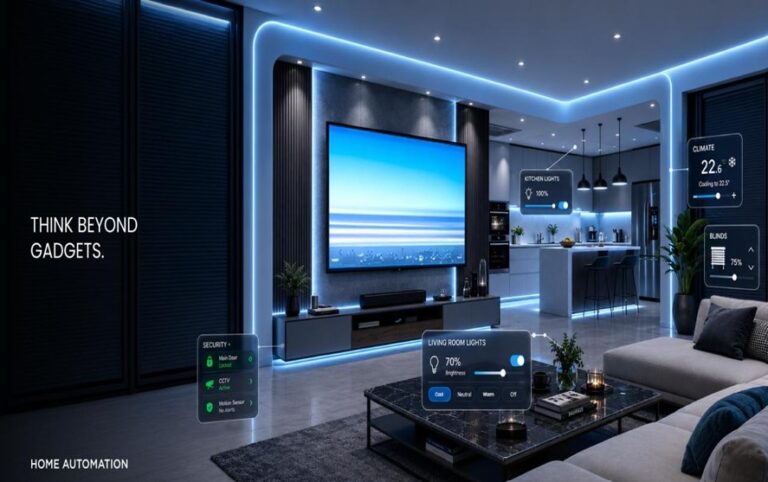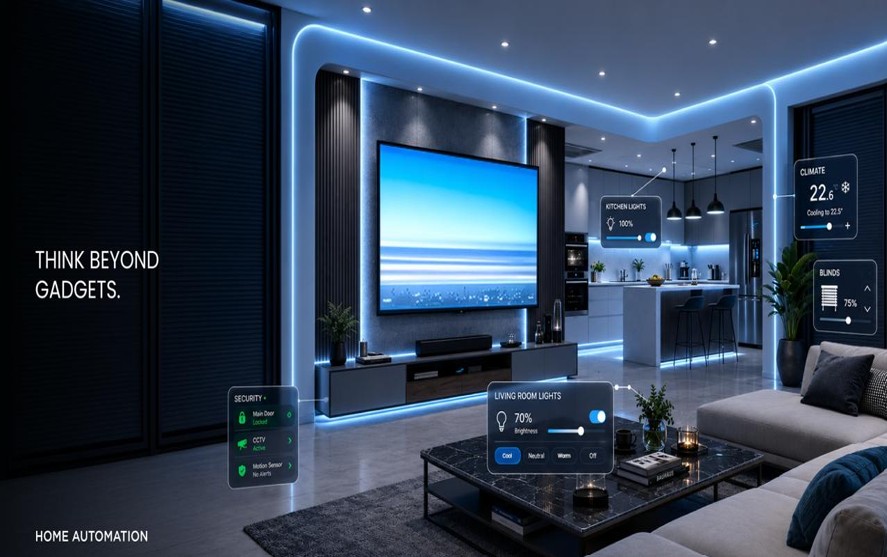
Smart technology has become a part of everyday life. From voice-controlled speakers to app-operated lights, many homeowners are adding connected devices to make their homes more convenient. However, there’s one common misconception: many people assume that owning a few smart devices means they already have a smart home. In reality, smart devices and smart home automation are not the same thing.
Understanding the difference is important if you’re planning to create a connected home that is not only intelligent but also efficient and easy to manage.
What are Smart Devices?
Smart devices are individual products that connect to the internet or your smartphone, allowing you to control them remotely or through voice assistants. Some common examples include:
- Smart bulbs
- Smart speakers
- Smart plugs
- Smart thermostats
- Smart doorbells
- Smart TVs
Each device performs a specific function independently. For example, you can switch on a smart bulb using your phone or ask a voice assistant to play music through a smart speaker.
While these devices offer convenience, they typically function independently unless integrated into a broader smart home ecosystem.
What is Smart Home Automation?
Unlike individual devices, smart home automation connects multiple systems and devices into one intelligent network that works together.
Instead of controlling each device individually, home automation systems let you automate various functions based on your routine, preferences, or predefined conditions. For example, a single “Good Morning” scene can:
- Turn on the bedroom lights gradually
- Open the curtains
- Adjust the air conditioning
- Switch on selected appliances
Similarly, a “Leaving Home” scene can automatically turn off lights, activate security systems, and switch off unnecessary electrical devices, all with one command.
This coordinated approach is what makeshome automationtruly intelligent.
Smart Devices vs Smart Home Automation
Although both rely on connected technology, they differ significantly in how they function.
| Smart Devices | Smart Home Automation |
| Work independently | Connect multiple devices into one system |
| Controlled individually | Controlled together through one platform |
| Limited automation | Fully automated routines and scenes |
| Best for basic convenience | Best for complete home management |
| Easy to install individually | Designed as an integrated solution |
Think of it this way: smart devices are like individual musicians, while smart home automation is the orchestra conductor that ensures everyone works together perfectly.
How Do Home Automation Systems Create a Connected Home?
The biggest advantage of home automation systems is integration. Instead of opening multiple apps for different devices, everything can be managed through a single interface.
Modern smart home solutions allow you to:
- Control lighting from anywhere
- Schedule appliances to operate automatically
- Create customised scenes for different activities
- Receive security alerts in real time
- Monitor and optimise energy usage
This not only simplifies daily living but also creates a more personalised and responsive home environment.
What are the Key Benefits of Smart Home Automation?
Here are the key advantages ofhome automation systems:
Greater Convenience
Automation eliminates repetitive daily tasks. Instead of manually adjusting lighting or switching devices on and off, your home can respond automatically to your routine.
Better Energy Efficiency
One of the biggest advantages of home automation is smarter energy management. Lights can dim automatically when natural daylight is sufficient, while appliances can switch off when not in use.
Improved Home Security
Unlike standalone security devices, integrated home automation systemscombine cameras, smart locks, motion sensors, and lighting into a single security network. If unusual activity is detected, the system can immediately send alerts to your smartphone while activating lights or other connected devices.
Seamless User Experience
With integrated smart home solutions, everything works together. Rather than remembering multiple apps or controls, you can manage your entire home from one platform or simply use voice commands.
Future Scalability
One major benefit of smart home automation is that it grows with your needs. You can begin with lighting automation and slowly add climate control, entertainment, security, and other connected systems without replacing your existing setup.
Which Option is Right for You?
The answer depends on what you’re looking for.
If you only want to control a few individual products, smart devices may be sufficient. They are relatively affordable and easy to install. However, if you want your entire home to function as one connected ecosystem, home automation systems offer a far more comprehensive solution.
They provide:
- Centralised control
- Better integration
- Improved energy management
- Enhanced security
- Greater convenience
- Long-term flexibility
For homeowners building a new property or planning a major renovation, investing in smart home automation often provides better value in the long run.
The Future of Smart Living
The way we interact with our homes is changing, thanks to rapid advancements in smart technology. Artificial intelligence, voice assistants, predictive automation, and connected ecosystems are making everyday living simpler, safer, and more efficient.
Rather than simply adding more smart gadgets, homeowners are increasingly choosing integrated smart home solutions that create a seamless experience across every room.
The future isn’t about owning more connected devices; it’s about making them work together effortlessly.
Build a Connected Home with a Smart Automation System
While individual smart devices certainly add convenience, they only solve isolated tasks. A complete home automation system creates an intelligent ecosystem where lighting, security, comfort, and everyday routines work together seamlessly.
Jaquar’s smart automation system is designed with this integrated approach in mind. Offering intuitive controls, seamless device compatibility, wired, wireless and hybrid connectivity options, voice assistant integration, energy-efficient automation, and scalable solutions for residential as well as commercial spaces, it helps transform everyday spaces into smarter, more responsive environments.
Explore Jaquar’s smart home automation solutions to experience a smart way of comfort, convenience, and control.
About the Author